
Inspiring Health & Protecting Futures
The Body Literacy Project equips educators and leaders to empower American students now with the knowledge they need to protect their healthspan, their lifespan, and their fertility in the future.


Teaching Body Literacy
The Body Literacy Project provides curriculum and resources that empower schools and communities to teach the next generation of Americans body literacy with confidence.
Age-appropriate, evidence-based curriculum delivered in an experiential, engaging format
Lesson plans, slides, and activities prepared for educators
Policy briefings and model legislation to aid decision-makers in integrating body literacy standards in their school districts and their states
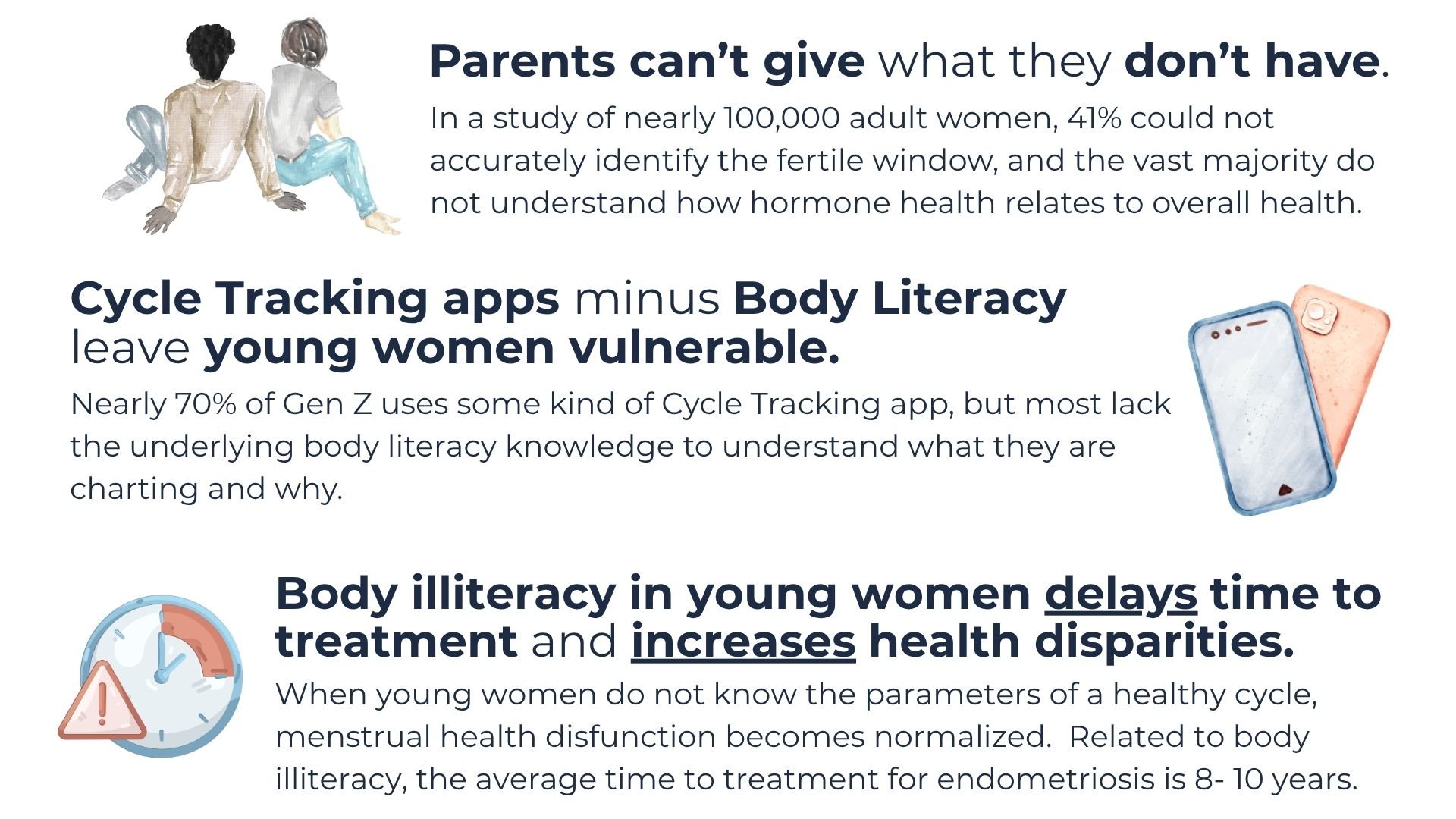
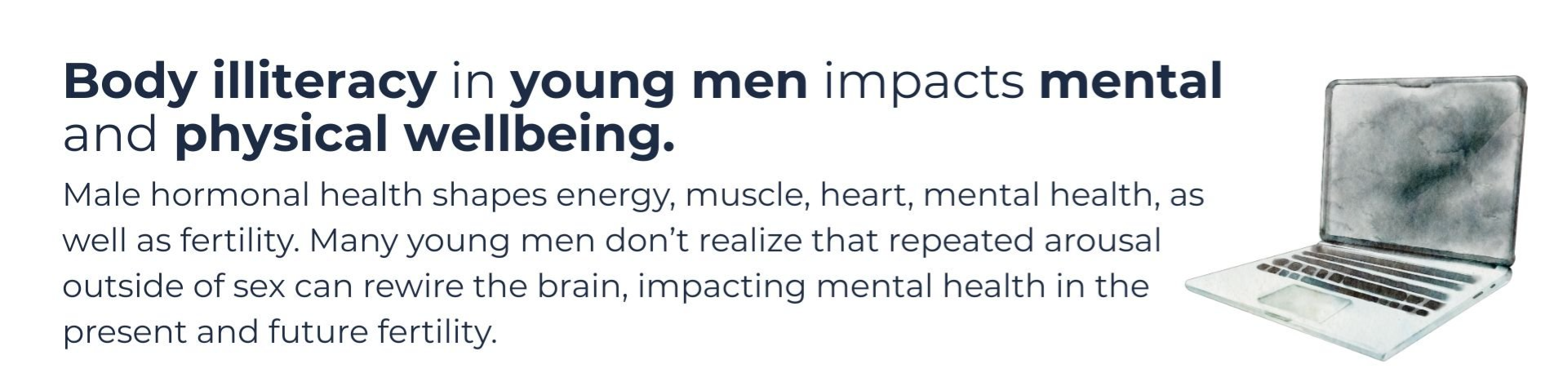
Why We Need Body Literacy
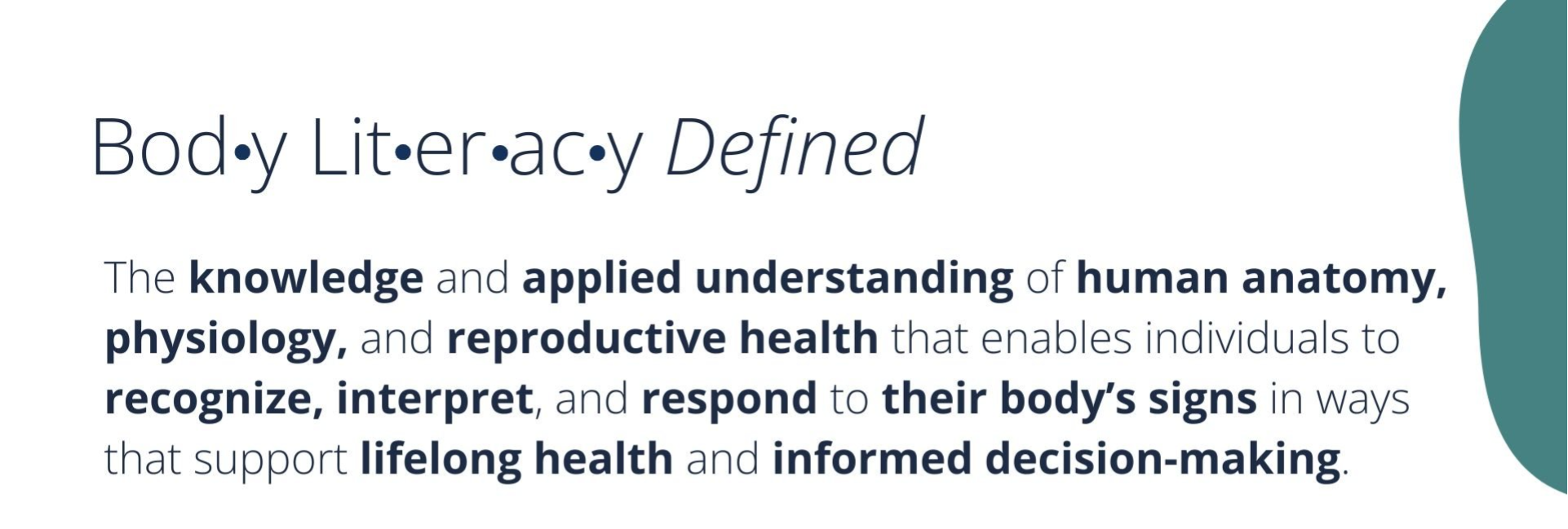
Defining What Body Literacy Is (and Isn't)
BODY LITERACY IS
A tool that offers accurate language to name embodied experiences and support healthy communication with parents, healthcare professionals and others.
A lens through which we understand how our reproductive health relates to our overall health, empowering a lifetime of free, prior, and informed consent over sexual and reproductive health choices.
A bedrock understanding of the mature human body, and the necessary foundation for Sex Education.
BODY LITERACY IS NOT
Puberty Education - A lesson to prepare students for changes to come, often focused on hygiene.
Sexual Education - A lesson on intercourse, biology of fertilization, safer sex practices, etc.
A set of value judgements regarding behavioral, sexual and reproductive health choices.
Learning Objectives

ABOUT WOMEN
Basic female anatomy and female physiology: Healthy women are cyclic beings
The Four Phases of the Female Cycle, and how women can expect to feel during each phase.
Reading and interpreting biomarkers of the Female Cycle
Understanding ovulation as the main event of the cycle
The 5th Vital Sign: How hormonal health (and fertility) relates to overall health
Identifying healthy periods and cycle abnormalities and when to seek help
Understanding the advantages and disadvantages of ovarian suppression for symptom management of menstrual health concerns vs. root-cause treatments.
ABOUT MEN
Basic Male Anatomy
Basic Male Physiology: Testosterone is responsive to stimuli of challenge and action
How healthy testosterone levels support overall physical and mental health
The Brain as the Primary Sex Organ
The Physiology of Arousal: waking erections or wet dreams as signs of hormonal health
Techniques for managing spontaneous arousal to optimize health and protect future fertility
How repeated arousal fostered outside of sex can rewire the brain
Benefits of Body Literacy

FOR EDUCATORS
Teachers receive 8 ready-to-use lessons aligned with body literacy standards detailed in model legislation.
This curriculum supports the education requirements listed in the Replicating Effective Teen Pregnancy Prevention (TPP) Programs Grant.
Complete with engaging activities and real-life scenarios, teachers will feel confident they have the knowledge they need to succeed and the tools to make it happen. The curriculum includes:
4 lessons for adolescent females
4 lessons for adolescent males
A teacher’s guide designed to ground instruction with structured plans
Access to The Body Literacy Project community for ongoing support and connection

APPLY TO BECOME A PILOT SITE
Help shape the future of student health education by becoming a pilot site for The Body Literacy Project. Participating schools will implement the curriculum with full educator support while contributing valuable feedback and outcomes data to help evaluate program impact in 7th and 8th grade settings.
Pilot schools commit to:
- Obtaining parental consent
- Teaching the full curriculum according to the provided scope and sequence
- Administering student and educator assessments
- Submitting anonymized feedback and outcome data
Accepted pilot schools will receive a 50% curriculum rebate upon completion of all program requirements, including assessments, surveys, and feedback submissions.

FOR POLICY LEADERS
For state legislators and school board members who want to make a difference in their students lives, the Body Literacy Project simplifies the process of passing body literacy standards for reduced health disparities and public health costs, healthier communities, and better long-term outcomes for American students. Get the package today:
Policy Briefing
Model body literacy education standards legislation (for school district level policy or an amendment to existing state health ed standards)
Frequently Asked Questions
Is The Body Literacy Project curriculum evidence-based?
The Body Literacy Project curriculum is evidence-informed and currently in the evidence-building phase. Click here to learn more.
Because body literacy is an emerging area within adolescent public health, there is not yet a large body of curriculum-specific research available. Rather than viewing this as a limitation, we see it as an opportunity to contribute to an important new field of public health education.
Our development process has intentionally focused on three complementary areas.
First, the curriculum content is grounded in established scientific evidence. Every lesson is built from current peer-reviewed literature in reproductive physiology, adolescent health, health literacy, menstrual health, hormonal health, and fertility awareness. The curriculum reflects current scientific understanding of puberty, reproductive health, and informed healthcare decision-making.
Second, the instructional design reflects established best practices in adolescent education. Lessons incorporate interactive discussion, graphic organizers, guided practice, classroom activities, partner discussion, reflection exercises, and formative assessment to reinforce learning through multiple modalities and improve knowledge retention.
Third, we are actively building the evidence base for body literacy education. Through our partnership with Duquesne University College of Osteopathic Medicine, the curriculum is currently undergoing formal evaluation through the Advancing Body Literacy Education (ABLE) Project. This mixed-methods evaluation examines student learning, body literacy knowledge, comfort discussing health with trusted adults, healthcare advocacy, and reproductive health self-efficacy using age-appropriate pre- and post-program assessments.
Our long-term goal is to continue strengthening the evidence base through increasingly rigorous evaluations as implementation expands.
Does this curriculum meet the requirements of the Tier 1 Teen Pregnancy Prevention (TPP) grant?
The Body Literacy Project was developed with MAHA adolescent health priorities in mind and supports the learning objectives described in the Tier 1 Teen Pregnancy Prevention Notice of Funding Opportunity. A crosswalk of the The Body Literacy Project and the grant objectives is available upon request.
The curriculum addresses body literacy, hormonal health, reproductive anatomy and physiology, informed consent, healthcare self-advocacy, healthy relationships, and parent engagement—all priorities reflected throughout the current funding announcement.
One important distinction is that the NOFO calls for a rigorously evaluated body literacy curriculum. At present, no curriculum exists that fully satisfies that expectation because body literacy itself is an emerging public health intervention rather than an established educational field.
Rather than waiting for others to build that evidence base, The Body Literacy Project has intentionally positioned itself as an evidence-building curriculum. Our content is grounded in peer-reviewed scientific literature, our instructional methods reflect established educational best practices, and our curriculum is currently undergoing formal evaluation through the ABLE Project in partnership with Duquesne University College of Osteopathic Medicine.
Organizations seeking to respond to the current NOFO often recognize that body literacy is an area where innovation and evaluation must progress together. We believe our curriculum offers one of the strongest available foundations for organizations seeking to implement body literacy programming while contributing to the growing evidence base that federal agencies have identified as a priority.
Is the curriculum age-appropriate for middle school students?
Yes. The curriculum was intentionally developed for students in grades 6–8, with most pilot implementation occurring in middle school settings. Lessons are written at approximately an eighth-grade reading level and present medically accurate information using developmentally appropriate language, interactive learning strategies, and age-appropriate activities.
The curriculum focuses on health literacy, body literacy, and informed decision-making rather than sexual behavior, making it well suited for middle school audiences.
Can the curriculum be used with younger or older students?
Yes—with thoughtful modifications.
The current version was designed specifically for middle school students. However, we believe the framework can be adapted successfully for upper elementary students (beginning around fifth grade) as well as high school students.
Future editions are planned that will adjust vocabulary, activities, depth of scientific content, and discussion questions to better match the developmental needs of younger and older learners.
Does the curriculum align with existing health education standards?
Yes.
The curriculum was developed to complement existing health education standards while advancing an emerging area of public health education.
Our female curriculum was inspired in part by the District of Columbia Menstrual Health Education Standards, which represent one of the nation's most comprehensive frameworks for menstrual health education. Those standards provided a valuable starting point for organizing age-appropriate female reproductive health concepts.
At the same time, existing standards provide very little guidance on body literacy concepts for boys. The Body Literacy Project expands this work by introducing parallel male-focused lessons on hormonal health, reproductive anatomy, biomarkers of health, and healthcare self-advocacy—an area where national educational standards continue to evolve.
Is instructor training required?
No.
The curriculum is intentionally designed so that qualified educators can implement it using the comprehensive Teacher Guide, lesson plans, and classroom materials provided with the curriculum.
For organizations that would like additional support, instructor training is available upon request.
Training can include:
Foundations of body literacy and cycle-informed reproductive health
Understanding adolescence in context of human development
Curriculum philosophy and learning objectives
Age-appropriate facilitation strategies
Creating a comfortable and respectful classroom environment
Responding to student questions while maintaining instructional boundaries
Medical accuracy and appropriate terminology
Teaching sensitive health topics with confidence
Strategies for reinforcing student engagement and participation
Maintaining curriculum fidelity across instructors
Parent communication and implementation best practices
Training formats range from virtual workshops to full-day, in-person professional development, and will become available the fall of 2026.
Does the curriculum include parental consent resources?
Yes.
Recognizing the important role parents play in adolescent health education, the curriculum includes customizable parent communication materials and informed consent templates.
Organizations may also use our optional partial opt-out process, which allows parents to excuse their child from specific lesson components while still participating in the remainder of the curriculum when appropriate. This provides flexibility while supporting meaningful family engagement.
Do we need separate logins for each instructor?
Each organizational license includes one user login.
If multiple team members would like their own individual access, additional user licenses may be purchased for $79 per user. Individual logins allow educators to access curriculum materials independently while making it easier for organizations to manage implementation across multiple instructors and locations.
Will I receive physical materials when I purchase this product?
No. This curriculum is digital. Access to the curriculum is set up during the purchasing process.
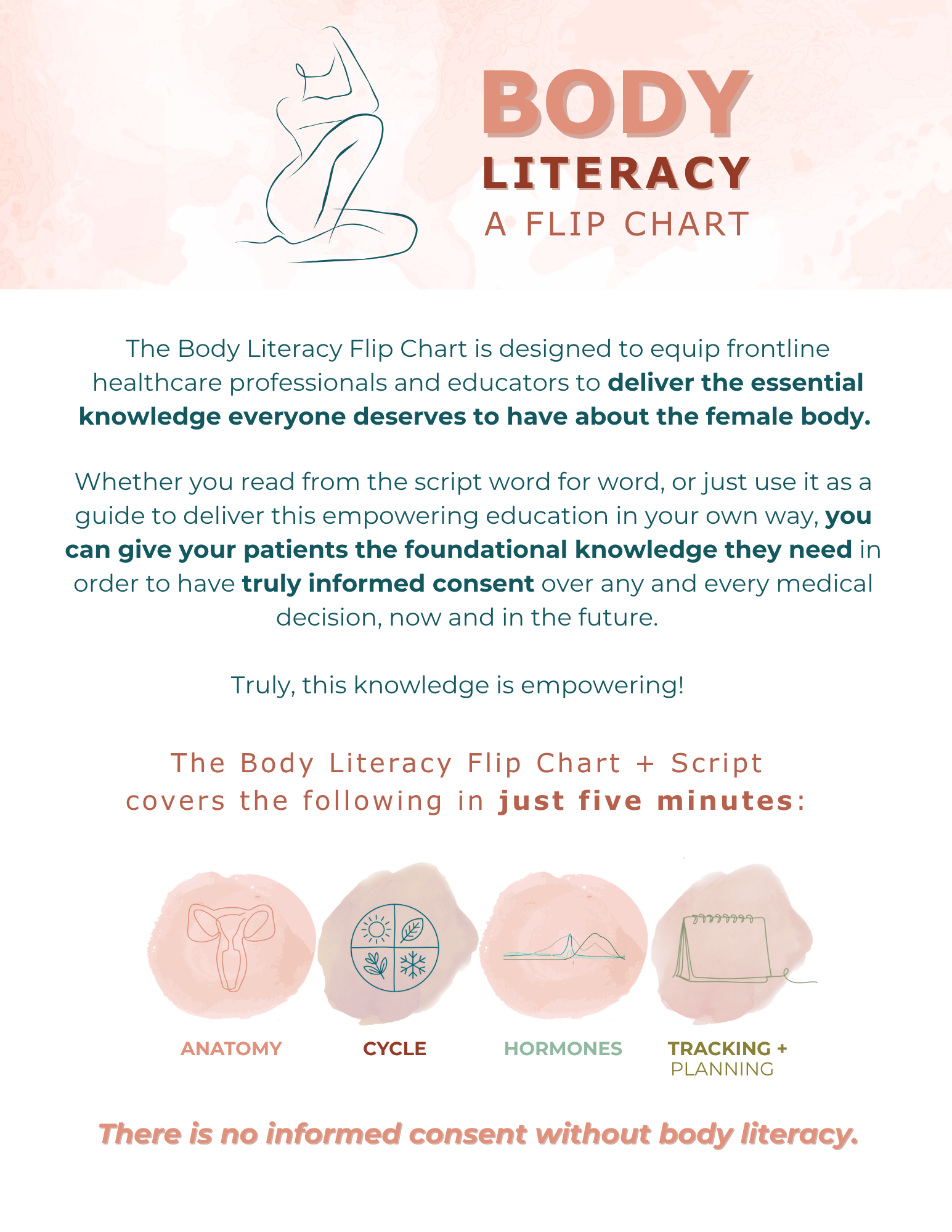
Digital Body Literacy Flip Chart + Script License
Deliver essential Body Literacy facts in any clinical encounter, including basic anatomy, the four phases of the menstrual cycle, biomarkers, and cycle tracking, using this digital 5-minute scripted Body Literacy Flip Chart.
Have More Questions? Let's Connect!

OUR FOUNDER
Katie E. Vidmar, MTS is a Body Literacy and Fertility Awareness Educator, and a passionate advocate for bringing holistic women’s health to underserved and under-resourced populations. She is the creator of Elevate, a training program for healthcare professionals designed to address health disparities through shallow-entry approaches to Body Literacy, Cycle Tracking, Fertility Awareness, and creating avenues toward root-cause healing for menstrual health problems in community health settings. As founder of the Body Literacy Project, she aims to ensure that every young man and woman in our country receives the knowledge of their bodies that is their birthright. She writes and speaks nationally, advocating for Body Literacy Education and Cycle-Informed Reproductive Healthcare for Women. She lives in Bismarck, ND with her husband and family.